
In Carefree, sunlight is part of the landscape. Bright mornings, clear skies, deep architectural shade, and the warm colors of the surrounding Sonoran Desert can make light inside a home feel almost as expressive as the artwork itself.
For collectors displaying glass, gourd, and bronze art, that changing light can create striking effects. Transparency becomes more noticeable, carved patterns can cast unexpected shadows, and sculptural surfaces can appear different as the sun moves across the room.
Quick answer: Natural sunlight can dramatically change how glass, gourd, and bronze artwork appears indoors because each medium interacts with light differently. Glass can transmit and refract light, pierced or carved gourds can produce patterned shadows, and bronze can reveal changing highlights across its dimensional surfaces. In Carefree homes, where strong desert daylight often meets shaded interiors, placement can become an important part of experiencing a piece throughout the day.
What local art collectors should know
Glass art can change character depending on whether it is viewed with light passing through it or reflecting from its surface.
The intense desert daylight around Carefree can create strong transitions between illuminated windows and shaded interior spaces.
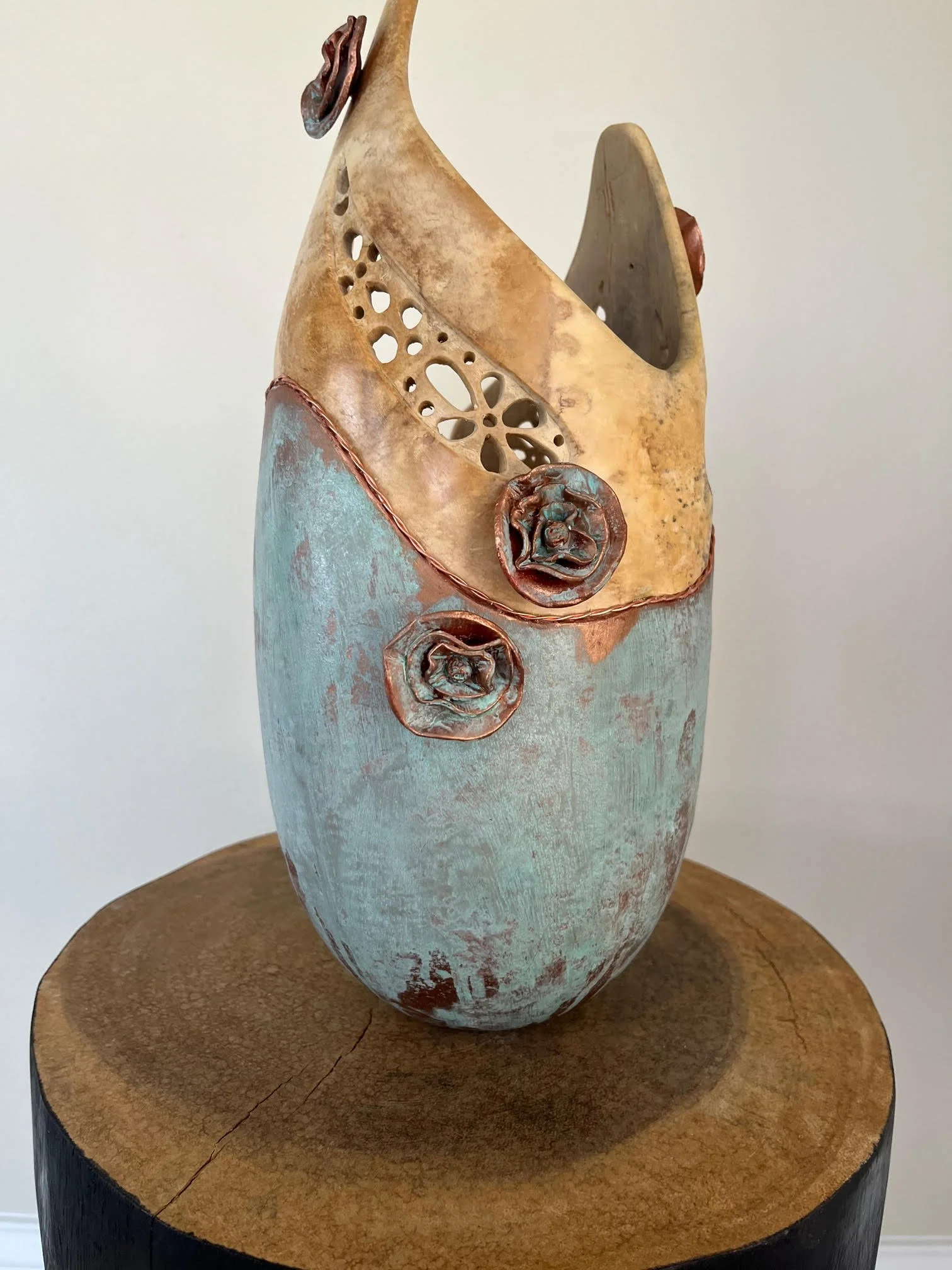
Gourd art with carved or pierced surfaces can use nearby light to extend its visual pattern onto walls, shelves, or surrounding surfaces.
Bronze sculpture responds strongly to directional light because highlights and shadows emphasize contours, texture, and depth.
A location that looks ideal at noon may feel completely different in the softer light of morning or late afternoon.
Why Does Desert Sunlight Change the Way Art Looks Indoors?
Desert sunlight changes the way art looks indoors because its intensity, direction, and color shift throughout the day, altering reflections, shadows, transparency, and surface detail. Around Carefree, the contrast between bright outdoor conditions and sheltered interiors can make those changes especially noticeable on dimensional and light-responsive artwork.
The experience is familiar to anyone who has watched Black Mountain change color toward sunset or noticed the sharp shadows surrounding the Carefree Sundial. Desert light does more than illuminate an object. It defines edges, reveals texture, and changes our perception of color.
Inside a home, architecture filters that light. Deep patios, large windows, clerestories, covered outdoor spaces, and shaded rooms can create very different viewing conditions only a few feet apart.
At Thunderbird Artists Gallery, art collectors can consider not only the subject, color, and scale of a piece, but also how a work might interact with the environment where it will ultimately be displayed. After that first viewing, we encourage collectors to think about art as something experienced over time rather than under one fixed lighting condition.
How Does Natural Light Affect Glass Art?
Natural light can make glass art appear luminous, layered, reflective, or nearly transparent depending on the piece and where the light originates. A glass work near a bright Carefree window may reveal qualities that are less obvious under uniform interior illumination, particularly when sunlight reaches different angles during the day.
Glass has an unusual relationship with its surroundings because viewers may see light passing through the work, reflecting from it, or interacting with internal colors and forms.
That creates possibilities for placement. A piece displayed where morning light reaches it may produce an entirely different impression later in the afternoon. Against a darker interior background, illuminated glass can gain visual contrast. In a brighter room, reflections from the surrounding desert palette may become part of the experience.
Direct sun exposure, however, should not automatically be considered the goal. Collectors should consider the individual artwork, its materials, and any care guidance associated with the piece before choosing a permanent location.
How Can Gourd Art Create Patterns Beyond the Artwork Itself?
Carved and pierced gourd art can create a second visual composition through the shadows and patterns produced by nearby light. When openings in a gourd allow light to pass through, the surrounding wall or surface can become part of the display, giving the artwork a changing presence after sunset or in controlled interior lighting.
That effect feels particularly appropriate in the Sonoran Desert, where patterned shade is everywhere. Palo verde branches, desert landscaping, patio structures, and sculptural architecture create constantly changing silhouettes in the intense Arizona light.
Indoors, a gourd piece can offer a similar relationship between solid form and negative space.
For collectors in Carefree and neighboring Cave Creek, this makes placement worth considering from multiple viewpoints. Look at the piece itself, but also look behind and around it. A nearby wall may become a canvas for shadow, while the distance between the artwork and that wall can affect how concentrated or dispersed a pattern appears.
Why Does Bronze Sculpture Look Different as the Light Moves?
Bronze sculpture can look different as light moves because directional illumination emphasizes changing contours, recesses, textures, and highlights across its three-dimensional surface. Rather than presenting one fixed image, a sculpture may reveal different visual details depending on the viewer's position and the direction of the room's light.
This is one reason sculpture rewards walking around it.
A raised detail may catch the morning light while a recessed area remains in shadow. Hours later, that relationship can reverse. Textured surfaces can appear more pronounced under light arriving from the side than under flat illumination from directly overhead.
In homes throughout the Carefree, Cave Creek, and north Scottsdale area, strong daylight can make those transitions particularly apparent. The surrounding desert landscape also provides a natural visual vocabulary of sculptural forms, from boulders and mountain silhouettes to branching saguaros.
What Are the Best Places to Display Light-Responsive Art?
The best place to display light-responsive art is where the piece can be viewed comfortably while receiving lighting that reveals its form without creating distracting glare or inappropriate exposure. In a Carefree home, that might mean evaluating several locations at different times rather than choosing a spot based on one midday viewing.
Useful locations to consider include entry areas with indirect daylight, niches with directional lighting, rooms with windows positioned to one side of the artwork, and interior walls where shadows have enough space to become visible.
Collectors can perform a simple test before settling on a location. Place the artwork safely in the proposed area and observe it in the morning, around midday, and in late afternoon. Then view it again under the home's evening lighting.
For fragile, sensitive, or mixed-media artwork, follow appropriate care recommendations for that specific piece rather than assuming that more sunlight is better.
What Common Display Mistakes Can Diminish the Effect?
Common display mistakes include treating lighting as an afterthought, positioning reflective pieces where glare overwhelms them, and evaluating a location at only one time of day. Desert homes experience substantial changes in natural illumination, so a display that succeeds in the morning may need another look in the afternoon.
Mistake: Choosing the brightest possible location.
Consequence: Strong light or glare may compete with the artwork rather than reveal it.
Better approach: Look for balanced illumination that allows details to remain comfortable to view.
Mistake: Ignoring the wall behind gourd art.
Consequence: Interesting shadow patterns may be lost.
Better approach: Consider the surrounding surface as part of the visual composition.
Mistake: Viewing bronze only from the front.
Consequence: Dimensional details may go unnoticed.
Better approach: Leave enough visual space, when practical, to appreciate the sculpture from more than one angle.
Mistake: Making a decision at noon.
Consequence: The room may look very different later.
Better approach: Observe the location across several hours.
What Is a Common Carefree Art-Placement Scenario?
A common Carefree art-placement scenario is a room with bright exterior views and a substantially more shaded interior, creating both opportunities and challenges for displaying dimensional artwork. A collector may initially place a work close to the strongest daylight, only to discover that a more protected location creates better contrast.
Imagine a glass piece viewed against the brilliant outdoor landscape. Depending on its characteristics, the background may visually compete with subtle colors and details. Moving the work deeper into the room could change the balance.
A bronze sculpture may benefit from directional illumination that reveals its contours. A pierced gourd may become more dramatic when positioned where its projected patterns have room to appear.
The lesson is not that one placement is universally correct. It is that the room participates in the artwork.
How Should Collectors Compare Natural and Controlled Lighting?
Natural lighting offers continuous variation, while controlled lighting gives collectors greater consistency and direction. For many Carefree interiors, the most satisfying solution may involve using daylight as part of the daytime experience and thoughtfully positioned interior lighting to reveal the work after the desert sun goes down.
Natural light can create surprise. It changes with the hour, season, window orientation, and surrounding architecture.
Controlled lighting offers predictability. It can help emphasize texture, illuminate a particular angle, or make an artwork enjoyable after dark.
Neither approach needs to exclude the other. The goal is to understand what qualities you want the lighting to reveal and to respect the care requirements of the artwork.
How Can Thunderbird Artists Gallery Help With Choosing Art for a Space?
Thunderbird Artists Gallery can help collectors think about how glass, gourd, bronze, and other artwork may relate visually to the spaces where it will be enjoyed. Seeing artwork in person gives collectors an opportunity to examine dimension, surface, color, and the way a piece responds as their own viewing angle changes.
A photograph can introduce an artwork, but dimensional work asks to be experienced from more than one position. Viewing pieces in person can also help collectors think more realistically about scale and presence.
For residents of Carefree, Cave Creek, north Scottsdale, and the greater Phoenix area, exploring art locally also provides a chance to consider pieces within the visual context of the Sonoran Desert.
Explore artwork and discover pieces that come alive through light, form, texture, and shadow
Frequently Asked Questions About Displaying Art in Desert Light
Does Carefree sunlight make glass art look different?
Yes, changing natural light can make glass art look different throughout the day. The direction and intensity of illumination can affect visible color, reflections, transparency, and contrast. Before selecting a permanent display location, observe the piece under several lighting conditions and follow any care recommendations appropriate to the individual artwork.
Is direct Arizona sunlight always best for displaying glass?
No, direct Arizona sunlight is not automatically the best choice for glass or other artwork. Bright light can produce dramatic effects, but glare may interfere with viewing, and individual materials can have specific care considerations. A protected location with indirect or directional illumination may provide a more satisfying visual result.
How can I display gourd art in a Carefree home?
Gourd art can be displayed where both its physical form and its relationship with surrounding light are visible. For carved or pierced pieces, consider the wall or surface behind the artwork as part of the display. Controlled lighting may also help reveal patterns and shadows when natural desert light fades.
Why is side lighting effective for bronze sculpture?
Side lighting can emphasize bronze sculpture because it creates highlights and shadows across raised and recessed surfaces. This contrast helps the eye perceive texture and three-dimensional form. In a room with abundant Carefree daylight, observing how window light moves across the sculpture can help identify a compelling placement.
Should I check artwork placement at different times of day?
Yes, checking artwork at different times is especially useful in Arizona homes with strong natural light. Morning, midday, late-afternoon, and evening conditions can produce noticeably different effects. A location that seems too dark at one hour may beautifully reveal texture or color when the direction of the light changes.
Can desert-inspired interiors affect how artwork is perceived?
Yes, surrounding colors, materials, architecture, and views can influence how an artwork is perceived. Stone, wood, neutral walls, expansive windows, and desert-facing rooms can all become part of the visual setting. The best placement allows the artwork and its surroundings to complement rather than compete with one another.
Where can Carefree-area collectors explore dimensional artwork in person?
Local collectors can visit Thunderbird Artists Gallery to experience artwork from changing angles and consider how different media respond to light. For people in Carefree, Cave Creek, north Scottsdale, and surrounding communities, seeing dimensional work firsthand can provide information about scale, texture, color, and visual presence that photographs cannot always convey.
See What Happens When Art Meets Desert Light
In Carefree, light changes constantly, from crisp desert mornings to long afternoon shadows and warm evening color. Glass, gourd, and bronze art can participate in those changes, giving collectors new details to notice long after a piece comes home.
Find Art That Changes With the Room Around It
Explore dimensional artwork with light, placement, and your Arizona space in mind.
